





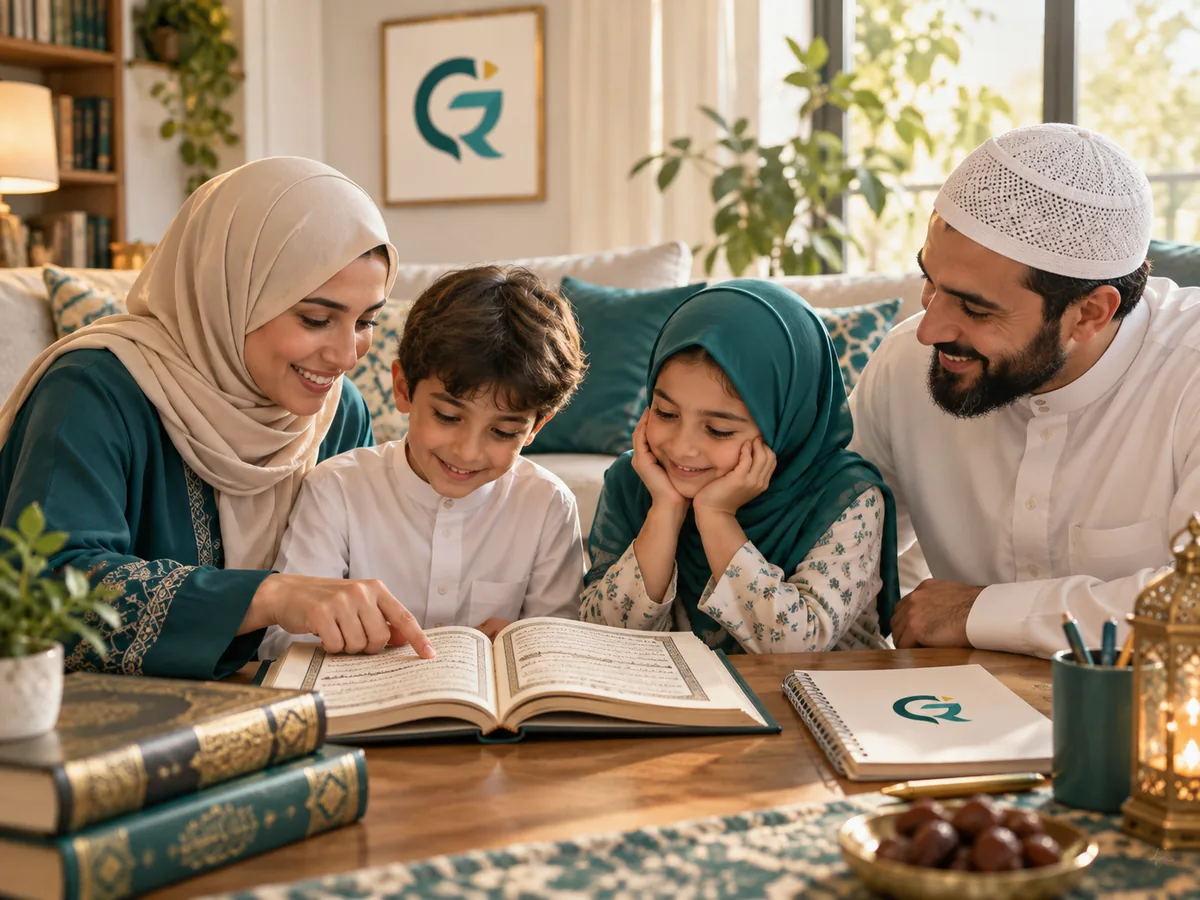
Children learn Islamic manners most reliably when good behaviour is attached to ordinary moments they repeat every day. A weekly lecture about manners may introduce an idea, but habits are built when the same expectation appears at the door, at the table, during play, when speaking to adults and when dealing with mistakes. The goal is to make adab visible and practicable rather than a list of abstract rules.
Choose one routine and one behaviour
Start small. For example, focus for a week on greeting properly when entering, asking before taking something, or speaking without interrupting. Too many instructions at once make it difficult for a young child to know what success looks like.
Model the behaviour before correcting it
Children notice how adults speak, apologise, wait and respond when frustrated. If the family wants calm speech, adults need to demonstrate calm speech. Modelling gives the child a concrete pattern to copy instead of only hearing what not to do.
Use short prompts at the moment of action
A brief reminder just before a familiar situation is often more useful than a long explanation afterwards. Before visiting relatives, remind the child of one or two expectations; before a meal, remind them of the chosen table manners. Keep the correction specific and proportionate.

Families who want a structured learning pathway can review the Islamic Manners programme.
Notice the good behaviour when it happens
Praise should describe the action rather than label the child. ‘You waited until she finished speaking’ teaches more than a general ‘good boy’ or ‘good girl’. It helps the child understand exactly which behaviour should be repeated.
Correct without turning every mistake into a sermon
Young learners need repetition. A missed greeting or impatient reply can be corrected briefly, practised again and then left behind. Constant moralising can make manners feel like punishment rather than part of normal family life.
Connect home practice with a broader Islamic studies pathway
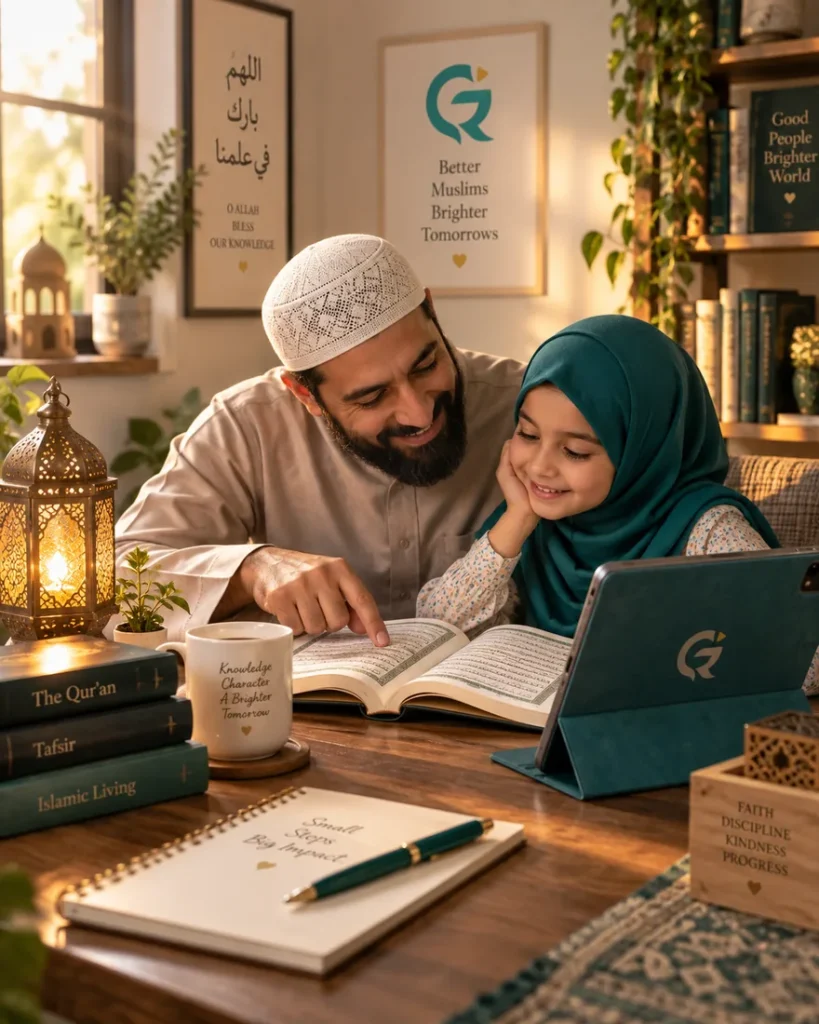
Home routines are strongest when children also learn why manners matter and how they connect with worship, family and community. The Children’s Quran & Islamic Foundations Curriculum offers that wider foundation, while children’s curriculum can help parents see how manners fit into the children’s curriculum.
Review progress by situations, not by perfection
Ask which routines are becoming automatic and which still need prompts. A child may remember table manners but struggle when excited during play. That difference is useful information for the next week’s focus.
Teaching Islamic manners is less about adding another lesson to the day and more about shaping the day itself. Small, repeated expectations, good adult modelling and calm correction give children many chances to practise adab until it begins to feel natural.