





The short answer
Quran Garden Arabic Reading for Kids
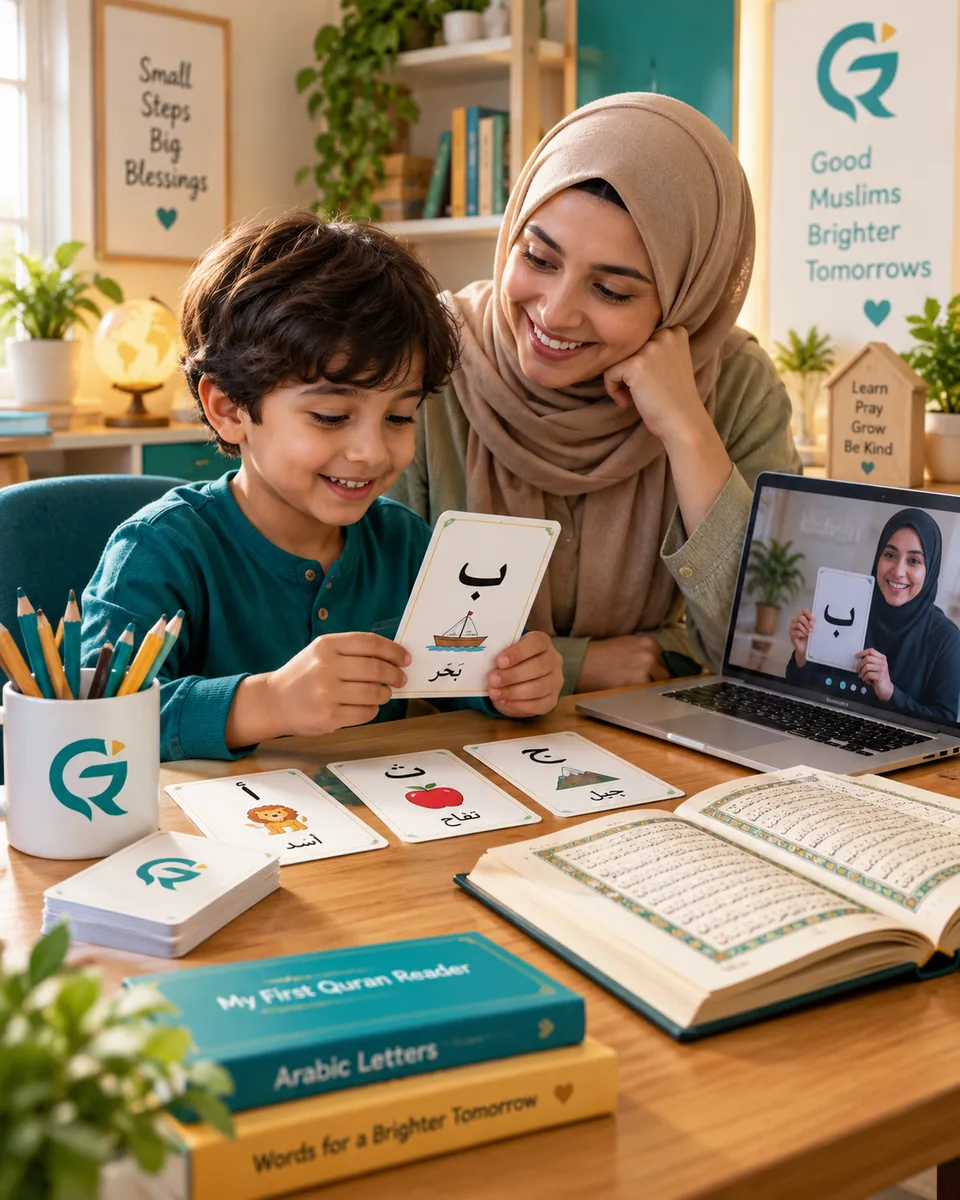
Quran Garden Arabic Reading for Kids does not try to fix everything at once. It starts from the observable bottleneck: a child recognises Arabic letters but reading words and short sentences is still slow or disconnected from meaning. The work stays centred on reading Arabic words and short sentences with stronger letter recognition and vocabulary through measurable practice. The practical marker is that the child reads short age-appropriate Arabic text more smoothly and can explain the basic meaning. If the first lessons show a different need, the starting point changes.
Who this program is for
A strong fit when a child recognises Arabic letters but reading words and short sentences is still slow or disconnected from meaning.
The listed level — Foundation — is a guide; real performance in the first tasks decides the true starting point.
Intended for Ages 6–10; pace and explanation are adjusted to the learner’s actual independence.
What we will actually work on
Core skill: reading Arabic words and short sentences with stronger letter recognition and vocabulary.
Program-specific practice: high-frequency word patterns, short sentences and quick meaning checks so reading and vocabulary grow together.
Useful progress marker: the child reads short age-appropriate Arabic text more smoothly and can explain the basic meaning.
What a lesson feels like
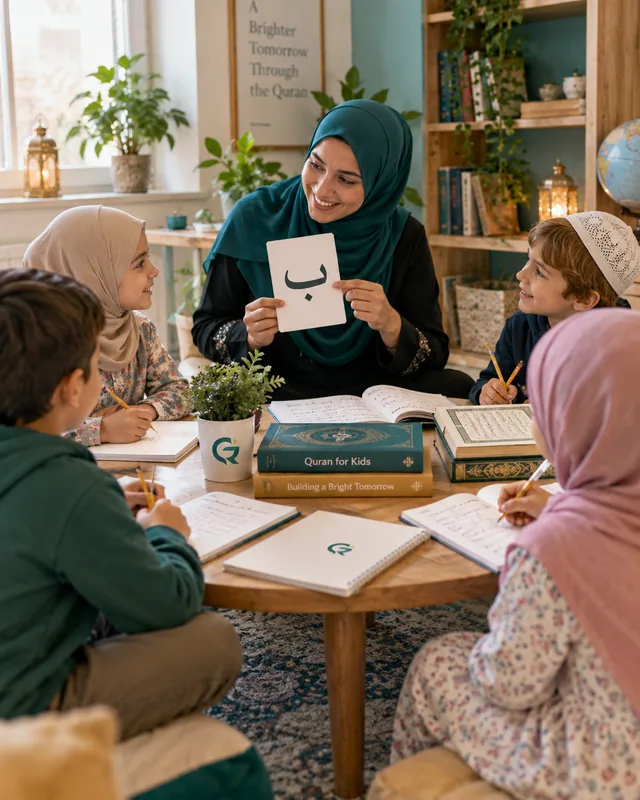
The learner hears and uses the language before analysing it too much, then reads or writes the same pattern in a controlled task. In Quran Garden Arabic Reading for Kids, the main target stays reading Arabic words and short sentences with stronger letter recognition and vocabulary. We therefore use high-frequency word patterns, short sentences and quick meaning checks so reading and vocabulary grow together, check the skill more than once, and finish with a clear next step.
A simple learning rhythm
Start with a short sample to check whether the main bottleneck is still: a child recognises Arabic letters but reading words and short sentences is still slow or disconnected from meaning.
Work on high-frequency word patterns, short sentences and quick meaning checks so reading and vocabulary grow together with correction tied directly to reading Arabic words and short sentences with stronger letter recognition and vocabulary.
Test different material to confirm that the child reads short age-appropriate Arabic text more smoothly and can explain the basic meaning.
Between lessons
The home task reuses the same words or sentence pattern in a small speaking, reading or writing action. In Quran Garden Arabic Reading for Kids, that practice stays tied to reading Arabic words and short sentences with stronger letter recognition and vocabulary and prepares the next visible marker: the child reads short age-appropriate Arabic text more smoothly and can explain the basic meaning. The task stays small enough to repeat consistently.

What progress should look like
The learner needs fewer prompts on the same type of task.
the child reads short age-appropriate Arabic text more smoothly and can explain the basic meaning.
The skill transfers to a new passage or situation rather than working only on prepared material.
Placement and the next step
A level label is not enough. We check actual performance in reading Arabic words and short sentences with stronger letter recognition and vocabulary and decide whether an earlier foundation needs reinforcement or the learner can start directly at the program target. Moving on depends on repeatable stability, not a fixed lesson count.
Questions learners and parents usually ask
Is this program suitable when a child recognises Arabic letters but reading words and short sentences is still slow or disconnected from meaning?
Yes. That is one of the main starting profiles this path is designed for. The first lesson also checks how strong the gap is and whether the starting point should move.
What do we work on first in Quran Garden Arabic Reading for Kids?
We start with reading Arabic words and short sentences with stronger letter recognition and vocabulary inside a short task, then use high-frequency word patterns, short sentences and quick meaning checks so reading and vocabulary grow together to address the cause without spreading attention across too many skills.
What should practice between lessons look like?
The home task reuses the same words or sentence pattern in a small speaking, reading or writing action. We normally repeat the same practice pattern that was corrected and understood in the lesson.
How can I tell the program is working?
The clearest marker is that the child reads short age-appropriate Arabic text more smoothly and can explain the basic meaning. We also look for fewer prompts and better transfer to new material.
When is it time to move on?
When the target skill can be repeated reliably across more than one example or lesson. A fixed number of lessons is not enough on its own.