






Siblings do not automatically need the same Quran learning plan, even when they are close in age or start lessons together. A shared family routine can make logistics easier, but the learning targets may need to differ because reading level, attention, confidence, pace and previous exposure are rarely identical. Fairness means giving each child what helps them progress, not making every detail the same.
Start from each child’s actual starting point
One sibling may recognise letters quickly while another needs more blending practice. One may have memorised several surahs but read slowly. A short individual assessment prevents the family from choosing a plan based only on age.
Share the schedule, personalise the target
It is often practical for siblings to study at similar times, use the same household routine or review together for part of a session. The target inside that routine can still be different: one child reads, another revises memorisation, and a third works on pronunciation.
Avoid turning the faster child into the standard
Children notice comparisons quickly. If one sibling progresses faster, using that pace as the family benchmark can make the other child feel permanently behind. Compare each child with his or her own previous performance instead.
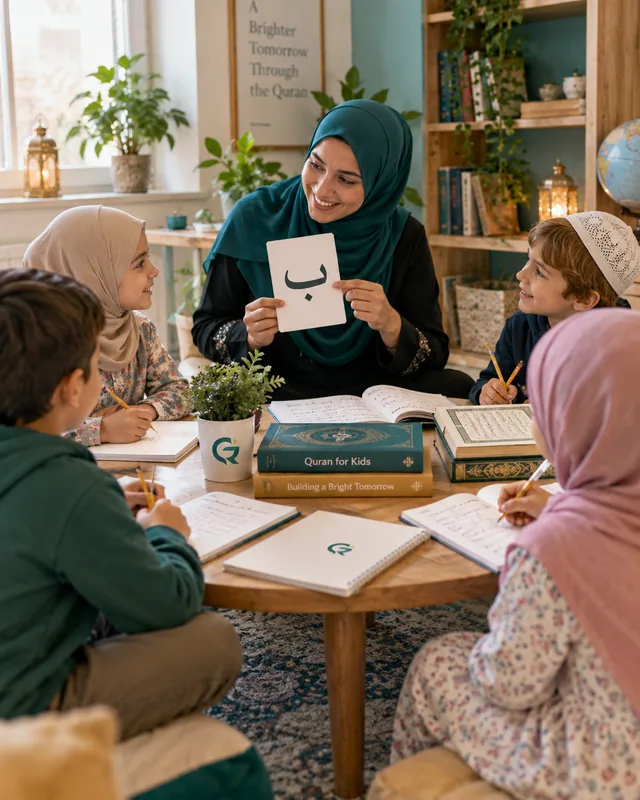
The Personal attention page explains why individual attention begins with the learner rather than a fixed template.
Lesson length may also differ
A younger or more easily distracted child may benefit from a shorter, more focused session, while an older sibling can sustain a longer task. The family can keep a consistent rhythm without forcing identical minutes or workloads.
Some activities can still be shared
Listening practice, family revision, short Islamic reminders or celebrating a completed goal can be done together. Shared moments can build positive association without requiring the same curriculum sequence.

Review the plan when one child changes faster
A plan that worked for both children in September may no longer fit by December. Reassess when a child’s reading, memorisation or concentration changes. The programmes provides the broader set of Quran Garden programmes, while Parent Guidelines offers parent-facing guidance for supporting learning at home.
Explain the difference to the children
If plans are different, tell the children why in simple terms: each person has a next step. This reduces the chance that a shorter lesson or different book is interpreted as reward, punishment or favouritism.
A family can have one Quran-learning culture without forcing one Quran-learning plan. Shared routines create consistency; individual targets protect progress. The best balance is usually common support with personalised next steps.