





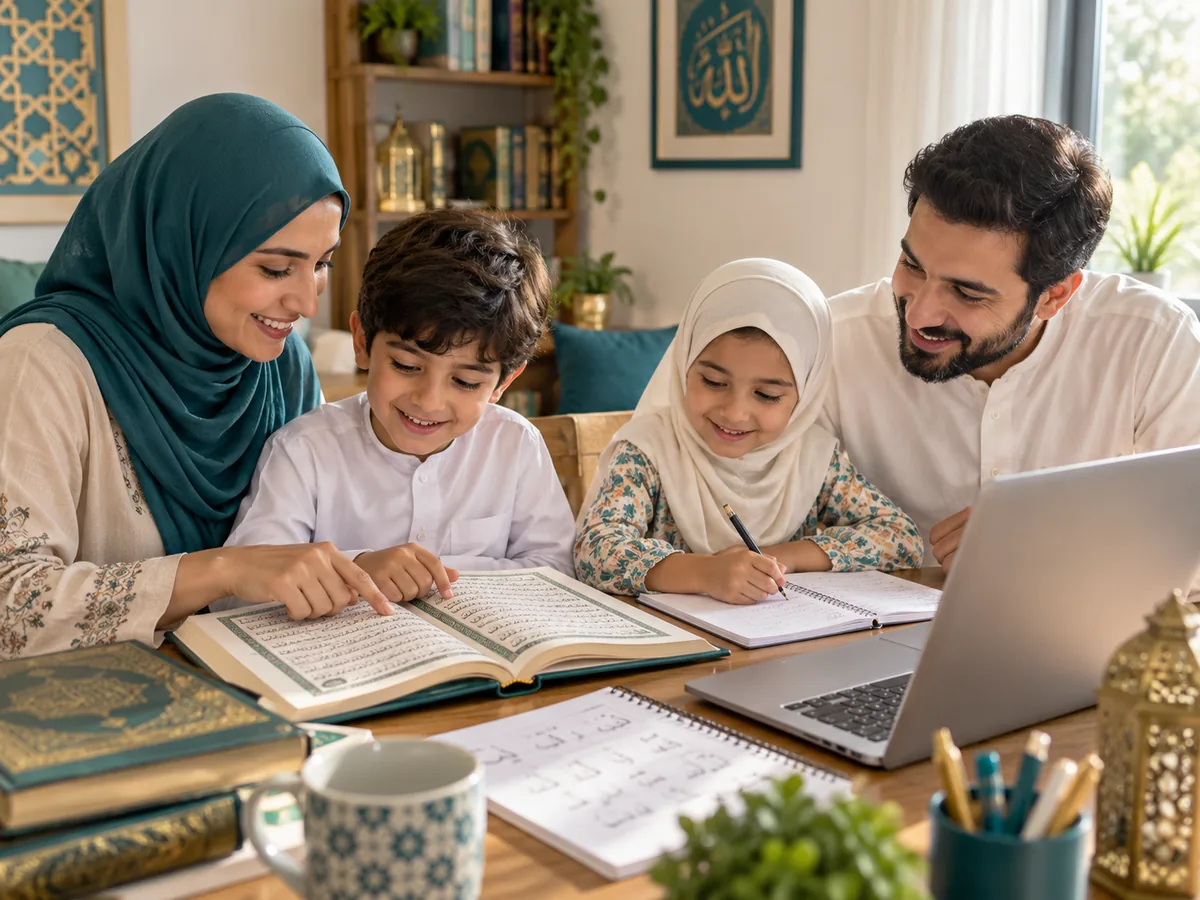
For a young child, Islamic Studies should begin with foundations that shape everyday understanding before moving into large amounts of detail. The first stage is not about turning childhood into a list of terms to memorise. It is about giving the child a clear picture of worship, good character, basic beliefs and the simple practices they meet in family life.
Start with meaning the child can recognise
Young learners benefit from ideas connected to real situations: who Allah is in the language appropriate to their age, why Muslims pray, why honesty matters, what Ramadan means to the family, and how kindness appears at home. Concrete examples make the subject feel lived rather than distant.
Build worship knowledge gradually
Children can learn the names and purpose of core acts of worship before they are expected to remember every detail. Salah, wudu and simple daily duas are easier to retain when they are taught alongside practice and routine, with correction that matches the child’s stage.
Character belongs inside Islamic Studies
Manners are not an optional extra after the ‘real’ lesson. Truthfulness, respect, patience, keeping promises and care for others give children places to apply what they learn. A lesson becomes stronger when the child can recognise one behaviour to practise during the week.
Use stories to support, not replace, foundations
Stories of the Prophets and other appropriate narratives can make values memorable, but the learning goal should stay clear. Ask what the child understood, what choice a person made, and what lesson connects to the child’s own life rather than treating a story as entertainment only.
Choose a pathway suited to young learners
The Little Muslims programme is the relevant starting point for children who need age-appropriate Islamic foundations. The Children’s Quran & Islamic Foundations Curriculum shows how Quran learning and foundational Islamic knowledge can sit within one broader learning path.
Depth should grow with maturity
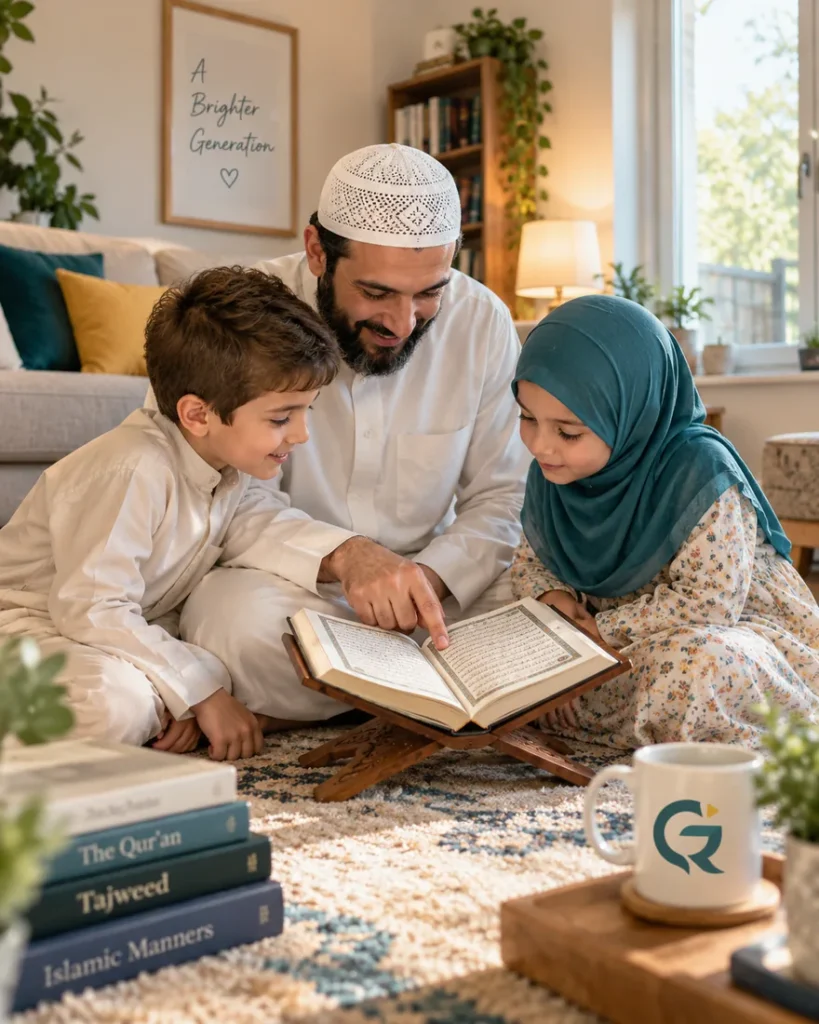
A six-year-old and a teenager should not receive the same explanation or level of detail. Good progression revisits the same foundations with increasing precision as the learner grows. Early clarity is more valuable than introducing advanced terminology too soon.
A strong beginning in Islamic Studies gives a child a small number of important ideas that are understood, revisited and lived. From that base, later study of worship, Seerah, manners, Fiqh and Aqeedah has something stable to build on.