





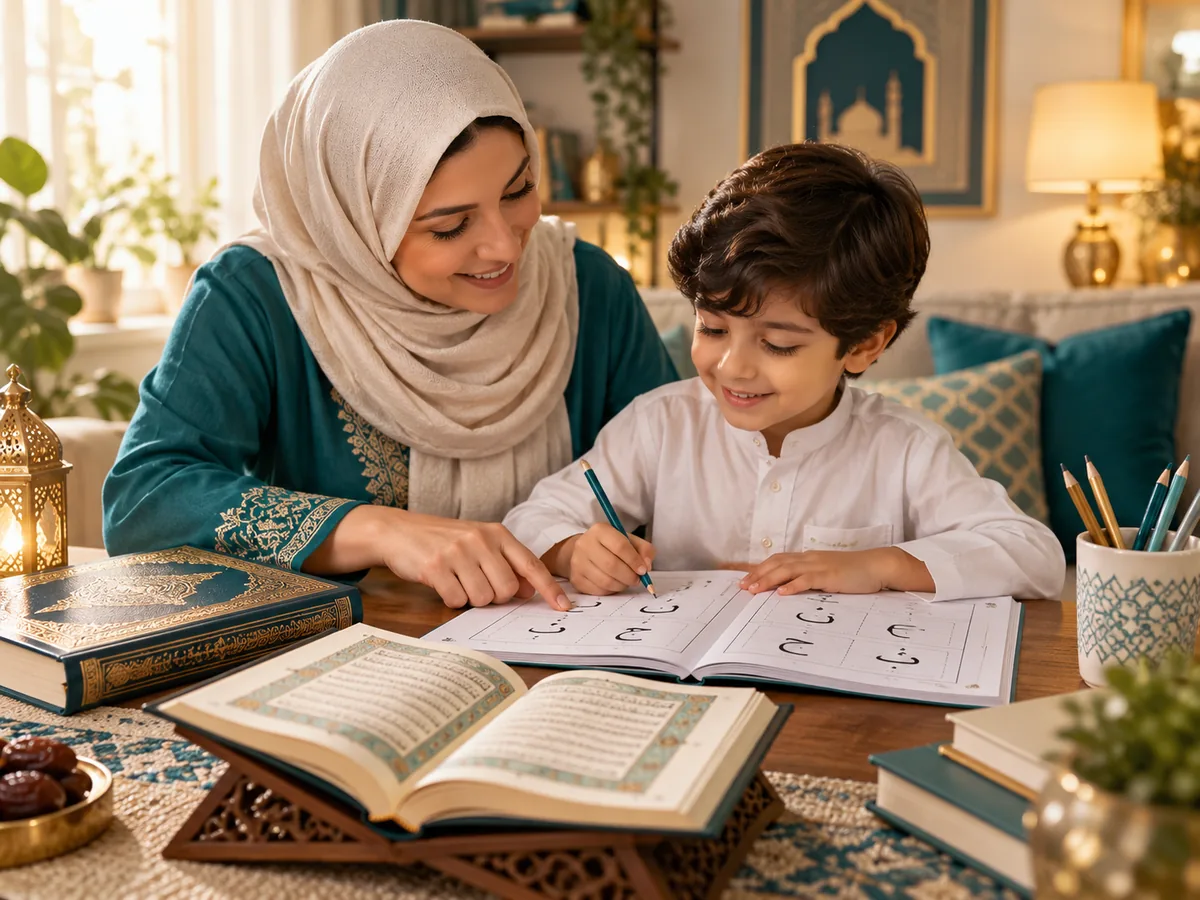
Learning Arabic letters for Quran reading and learning Arabic as a language begin with the same alphabet, but they do not stay on the same path. A learner focused on Quran reading needs decoding, vowel signs and accurate pronunciation early. A learner aiming to understand and use Arabic also needs words, meanings, sentence patterns, listening and eventually speaking or writing.
The alphabet is shared; the purpose is different
Both learners need to recognise connected forms and read from right to left. After that, priorities separate. Quran-reading practice asks, “Can I decode this accurately?” General Arabic learning quickly adds another question: “Do I understand what this word or sentence means?”
If the main aim is language use, Arabic First Words is the more direct route. If the immediate aim is Quran decoding, First Letters keeps the focus on reading foundations.
A Quran-reading route gives early attention to reading signs
For Quran reading, short vowels, sukun, shaddah and common reading patterns matter early because they change how the written form is sounded. The learner may practise combinations that are useful for decoding even when the vocabulary itself is not being taught as conversational language.
Pronunciation also deserves close attention because a reading habit can become difficult to change later.
A language route adds meaning from the beginning
In a broader Arabic course, letters and sounds are quickly linked to useful words. The learner needs to understand, recognise and reuse vocabulary rather than simply pronounce it. Simple phrases, listening and basic sentence patterns therefore appear much earlier.
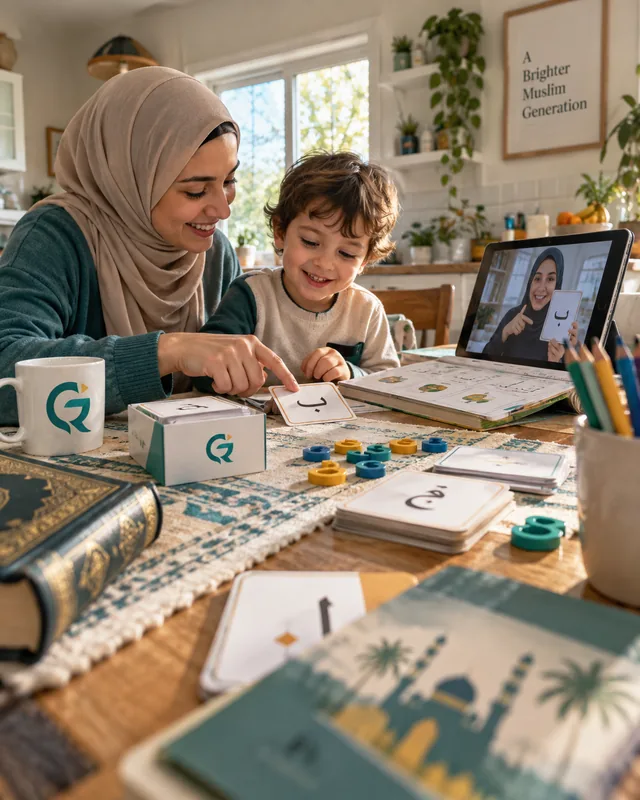
The Arabic Language curriculum gives that broader context beyond the alphabet stage.
Children may need the choice to be especially clear
A child who is learning two paths at once can confuse the goal of an exercise. One page may ask for accurate decoding; another may ask the child to understand and use a word. Parents can help by naming the task: “Today we are reading the sound” or “Today we are learning what the word means.”
There is no problem with studying both aims, but the lesson should make clear which skill is being practised.
Do you need two separate alphabets? No
The letters are the same. What changes is the sequence and the type of practice after basic recognition. A learner does not need to relearn the alphabet, but may need to strengthen a skill that was not emphasised on the first path.
For example, someone who learned to decode Quranic text may later discover that everyday vocabulary and listening are new challenges. A general Arabic learner may read simple words but still need more specific work on Quran-reading signs and recitation accuracy.
Which path should you start with?
Choose according to the next six months, not an abstract idea of which course is “better”. If your urgent goal is to begin reading Quran accurately, prioritise that. If you want to understand Arabic lessons, read modern texts or build speaking ability, start with the language pathway. If both matter, decide which one will be primary and keep the other as a smaller parallel goal.
For the Quran-reading side, Arabic Letters for Quran Reading: What Beginners Need First explains the early sequence in more detail.
A simple decision check
Ask yourself three questions:
- Do I mainly need to pronounce written Arabic accurately?
- Do I need to understand and use common words soon?
- Will I study one goal intensively, or two goals at a slower pace?
The answer usually makes the starting path clear. The alphabet opens both doors, but the lesson after the alphabet should match what you actually want Arabic to do for you.